The Magical World Beneath Your Feet
Why Soil Health Matters (and What You Can Do About It)
Imagine this…
You discover a group of magical beings. Tiny, mostly invisible, yet they hold the power to create life, sustain ecosystems, and feed the entire world.
If they thrive, everything thrives. If they disappear… everything begins to fall apart.
You’d protect them at all costs… right?
Here’s the thing: these magical beings are real.
They’re not characters in the new Peter Jackson film or brought back from the moon on an Artemis mission, they’re living in the soil beneath your feet.
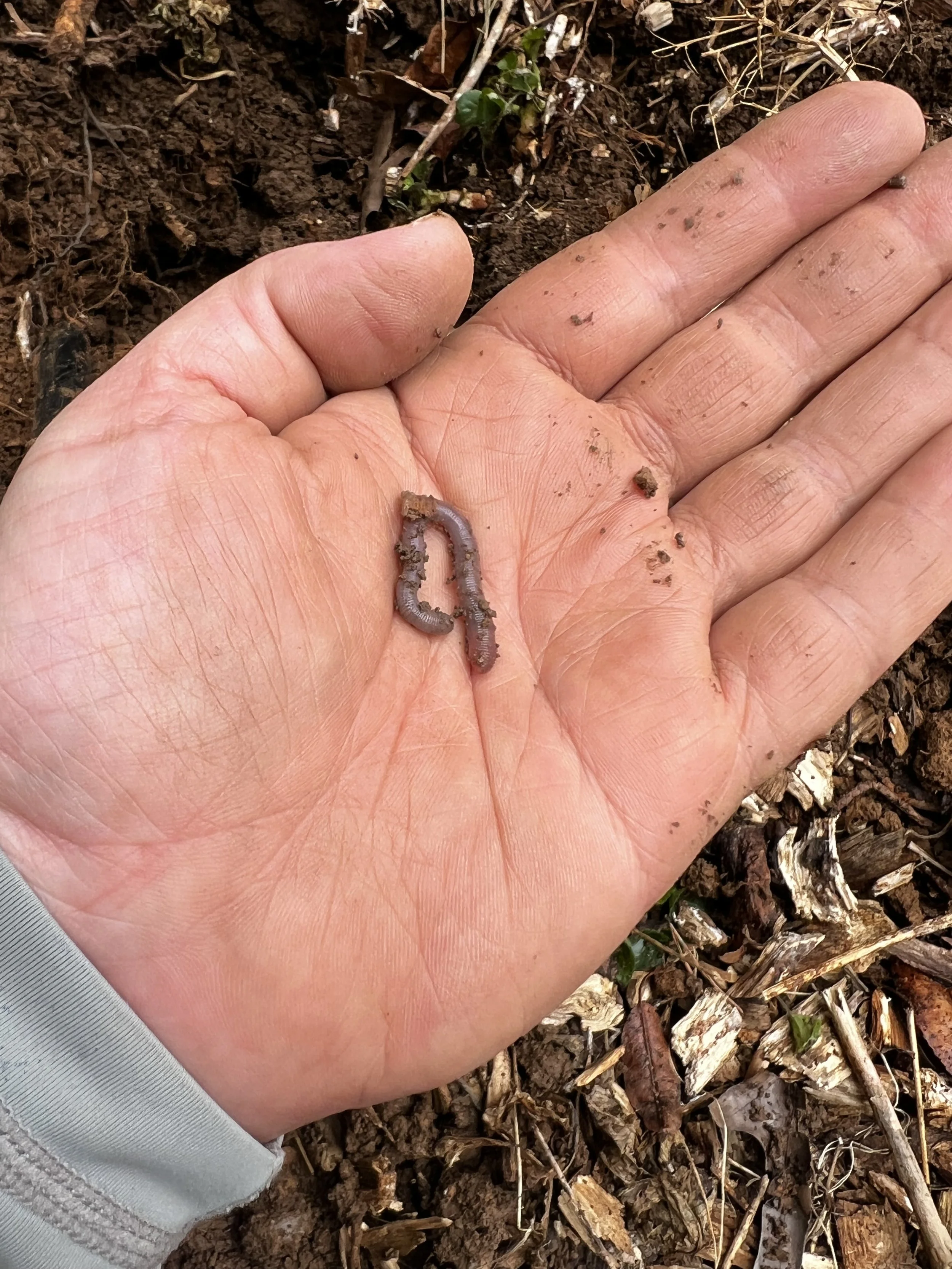
Microbes, fungi, bacteria, and earthworms are constantly at work—transforming rocks and organic matter into nutrients that plants can absorb. Those plants then feed everything above ground: insects, animals, and us.
That is the foundation of life on Earth.
And yet, it’s something we rarely think about.
What Is Soil Health?
Soil isn’t just “dirt.”
The USDA defines soil health as:
“The continued capacity of soil to function as a vital living ecosystem that sustains plants, animals, and humans.”
That means soil is alive.
Beneath the surface exists an intricate, interconnected web of life—just as complex as any ecosystem we see above ground. These organisms work together to:
Cycle nutrients
Store and filter water
Build soil structure
Support plant growth
Store carbon
In many ways, soil functions similarly to the human gut microbiome. When it’s balanced and diverse, everything thrives. When it’s disrupted, problems begin to appear.
It’s estimated that in just one tablespoon of soil, there are more organisms than there are people on this planet. Astounding! And with all that humans are doing to the environment, the least we can do is help them!
Why Soil Health Matters
There’s a powerful quote often attributed to agricultural researchers:
“We owe our existence to six inches of topsoil and the fact that it rains.”
That thin layer of topsoil is where the majority of soil life exists. It’s where nutrients are created and exchanged, where roots grow, and where the magic happens.
But here’s the reality:
We are losing topsoil through erosion, construction, and over-tilling
We are disrupting soil ecosystems with chemicals and excessive disturbance
We are releasing stored carbon when deeper soil layers are exposed
We cannot continue stripping away the very foundation that sustains us and expect the system to keep functioning.
The Hidden Cost of “Quick Fixes”
In modern landscaping and agriculture, we often prioritize speed, convenience, and appearance over long-term health.
Tilling may look productive, but it disrupts soil structure and microbial life, while speeding up the decomposition of organic matter
Chemical inputs may solve short-term problems, but may harm beneficial organisms
Bare soil may look tidy, but leaves the fragile soil ecosystem vulnerable
There’s a powerful parallel here:
Using pesticides, herbicides, and fungicides excessively is similar to overusing antibiotics. While they can eliminate harmful organisms, they also wipe out beneficial ones, creating imbalance.
And just like in human health, imbalance leads to bigger problems over time.
We’ve traded long-term resilience for short-term results.
Nature Already Knows the Answer
The good news? We don’t have to figure this out from scratch. Nature has been building and taking care of healthy soil since the beginning of time. All we have to do is observe… and mimic.
In nature, soil is:
Rarely disturbed
Always covered
Continuously fed
Rich in biodiversity
When we replicate these patterns, soil begins to thrive.
What You Can Do at Home
You don’t need acres of land to make a difference. Whether you have a large yard, a small garden, or a few pots on a balcony, your actions matter. Here are simple, effective ways to improve soil health:
1. Disturb the Soil Less
This is by far the easiest way to help your soil: Do nothing. Seriously. Leave the soil alone.
Tilling can feel satisfying, but for soil organisms, it’s like a natural disaster. It also brings weed seeds to the surface, giving them the signal to germinate.
It disrupts microbial communities, destroys soil structure, and can create compacted layers beneath the surface (known as hardpan). Think of those delicate plant roots that are making their way through that rich layer of top soil, only to hit a wall. Literally. It won’t help the soil to till, and it certainly won’t help plants in that tilled soil grow stronger.
What to do instead:
Try no-till or low-till gardening methods
Only disturb soil when absolutely necessary
Top soil also acts as a seal for the secondary layer of soil. That secondary layer serves as a trap for carbon, making it available for the plants whenever their happy little plant hearts desire. When top soil is removed, during construction for example, all of the carbon that is being held in that secondary layer is released into the atmosphere. A situation that is best described as: “Uh oh!”
On a similar note, if you’ve ever been encouraged to go “peat free” or purchase garden products that don’t contain peat moss, that is because peat bogs also serve as a carbon trap. When the peat moss is harvested, the carbon is released into the atmosphere. Another “uh oh!” situation.
Yes, peat moss does regenerate, however it regenerates at approximately 1/32” (0.78mm) per year. It is harvested tremendously faster than it can regenerate. So please go peat free whenever possible!
2. Keep Soil Covered
In nature, bare soil is rare, and for good reason.
Cover protects soil from:
Erosion
Temperature extremes
Moisture loss
Easy ways to cover soil:
Mulch with leaves, straw, or wood chips
Plant ground covers or cover crops
Leave plant debris in place when possible
Avoid landscape fabric. While it may smother weeds, it’s also smothering the roots of the plants you want to keep. It does not allow air and water to readily pass through, at least not at natural rates.
If you’ve ever pulled up landscape fabric only to find a mass of weed seedlings a few days later, there’s a reason for that! Those weed seeds were hibernating under that safe layer of landscape fabric. Once they were exposed again, that was their signal to germinate!
3. Feed the Soil
Healthy soil needs organic matter. Instead of feeding plants directly, focus on feeding the soil organisms that support them. This will make more readily available plant food and produce stronger plants!
Ways to feed your soil:
Add compost
Use natural fertilizers
Incorporate organic materials like leaves or grass clippings
These inputs fuel the microbial life that makes nutrients available to plants.
2-for-1 deal: Leave the leaves! If you’ve ever heard the term “Leave the leaves” in the Autumn, this is beneficial for the soil as well. Not only do you get free mulch, but as the leaves break down, they add wonderful organic matter to the soil.
4. Diversify your plantings
Nature thrives on diversification. Planting more than one type of flower, foliage, tree, etc. improves the resilience of the entire soil ecosystem. Focus on native varieties for the most resilient, maintenance free option!
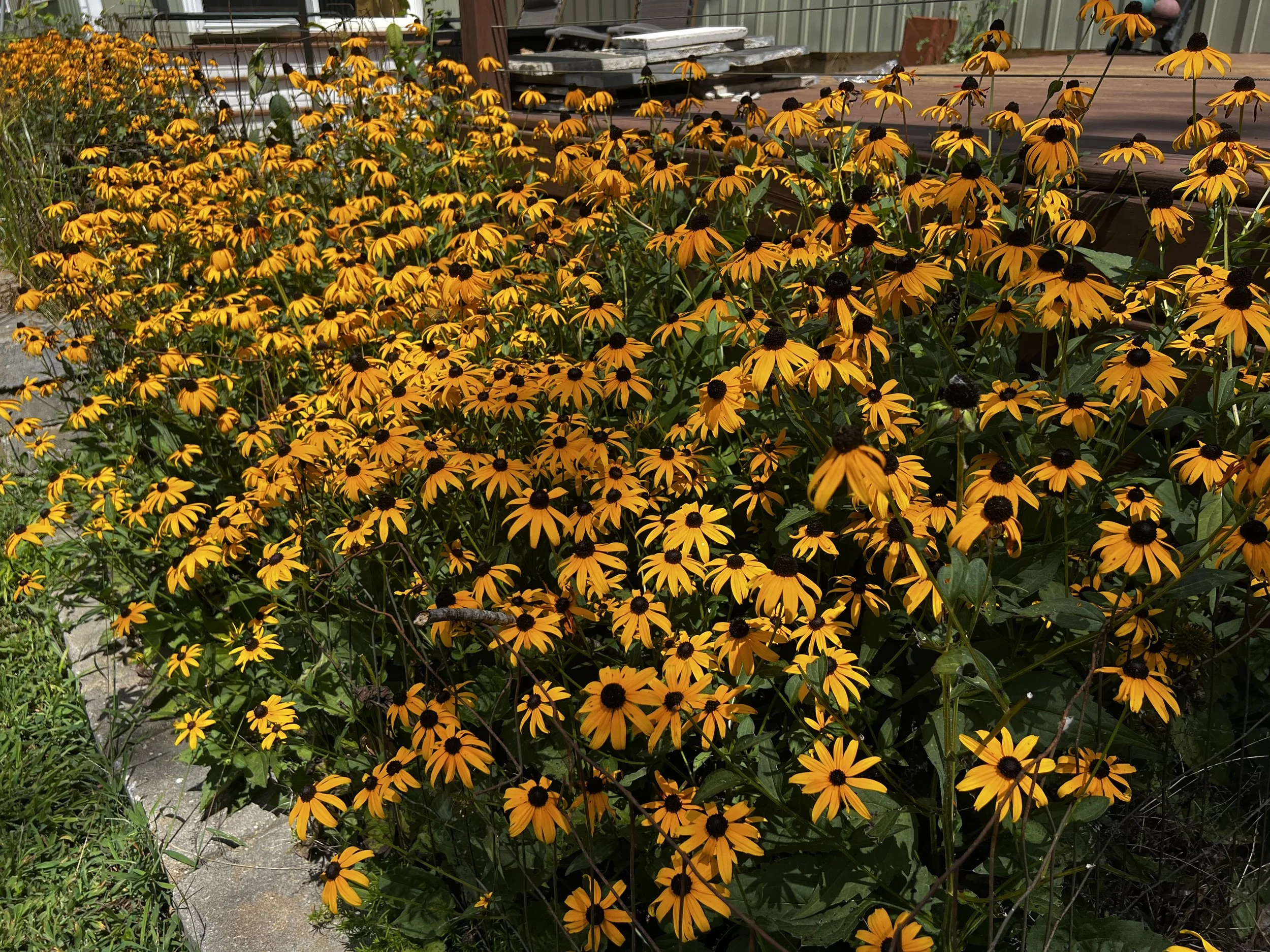
Rudbeckia Hirta - a native to Virginia/North America. A pollinator favorite that blooms from summer through the first frost.
5. Be Mindful with Chemicals
Chemicals don’t just target unwanted pests, they can also harm beneficial organisms. When those beneficial organisms disappear, soil health declines.
Consider:
Reducing or eliminating synthetic chemicals
Using organic or regenerative practices
Encouraging natural predator-prey relationships
Don’t freak out the moment you see a pest! This is where panic usually sets in and people rush to get rid of the pests. The first step is to identify the culprit and make sure it actually is a pest. Would you be able to identify this if you saw it in your yard?
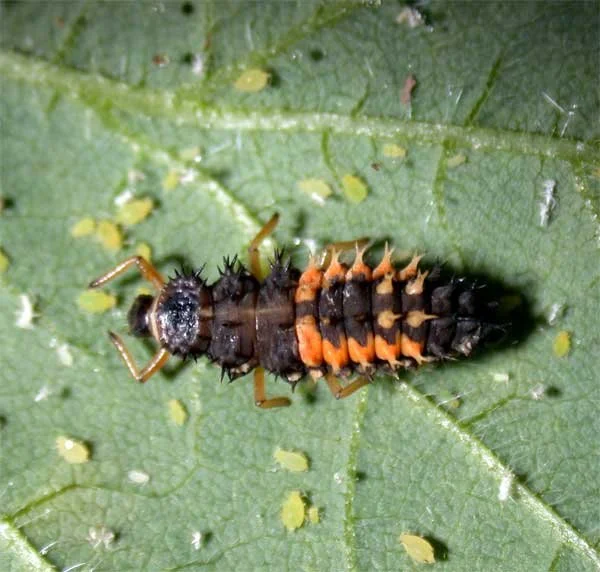
Is this a friend or a foe? It’s actually a friend! This is a lady beetle/bug nymph. They will take care of your aphids, just leave them alone and let them do their thing!
Keep in mind that this is all about balance: you need light to have dark, and you need pests in order to attract the beneficial insects, otherwise they won’t have a reason to stay! Trust me, a few aphids won’t be an issue! The presence of pests is nature’s way of setting up a factory of beneficial insects.
If you need a pep talk on this, I wrote about an intense aphid infestation I experienced last spring. Give it a read (it’s under the April Farm Updates section) and take a deep breath!
6. Get to Know Your Soil
You don’t need to be an expert—but a little knowledge goes a long way.
For more detailed insights, contact your local extension office for professional soil testing and recommendations. The local Master Gardeners in your area will have resources available as well. Happy soil testing!
Small Actions, Big Impact
It’s easy to feel like one person can’t make a difference. But soil health is built collectively through millions of small, consistent actions.
Your yard matters.Your garden matters.Even your potted plants matter.
Change doesn’t happen all at once. It happens step by step. Be a good soil steward, spread the word, and help the soil quality of the world!
Moving from Hope to Action
There’s a quote from Dr. Jane Goodall’s final tour in 2025 that captures this perfectly:
“We have an opportunity ahead of us, if we get together. If we get together with our intelligence, if we get together with our passion for change, if we get together helping our young people to understand that there is hope, then we can make the change.”
Hope is powerful, but action is what creates change. So here’s your challenge:
Choose one thing from this post. Just one.
Start there.
Maybe it’s adding mulch. Maybe it’s skipping tilling this season. Maybe it’s starting a compost pile.
Go easy on yourself. Keep it simple. Stay consistent.
A Final Thought
Beneath your feet is a living, breathing ecosystem. It supports everything we see and everything we depend on. When we care for the soil, the soil takes care of everything else. And that is how we grow not just healthier plants but a healthier world.
If you’d like to dive even deeper, https://www.4thesoil.org/ has great resources for helping your soil health.
🌎 🌍 🌏 Happy Earth Month 🌎 🌍 🌏
I hope you take some time today, and every day, to marvel in the wonder of nature and how precious it is to have the opportunity to live on this planet.