Before You Mow: A Note About Box Turtles
Last spring I wrote a post called “A “messy” yard = a thriving ecosystem!” about delaying spring yard clean-up so overwintering insects and wildlife have time to safely emerge from their winter homes.
This year I want to highlight another important neighbor that shares our fields, gardens, and forests: the Eastern Box Turtle.
As we move into mowing season, it’s worth slowing down and keeping an eye out for these remarkable reptiles. They live long lives, return to the same places year after year, and play an important role in our ecosystem—but they’re also vulnerable to lawn mowers, roads, and habitat loss.
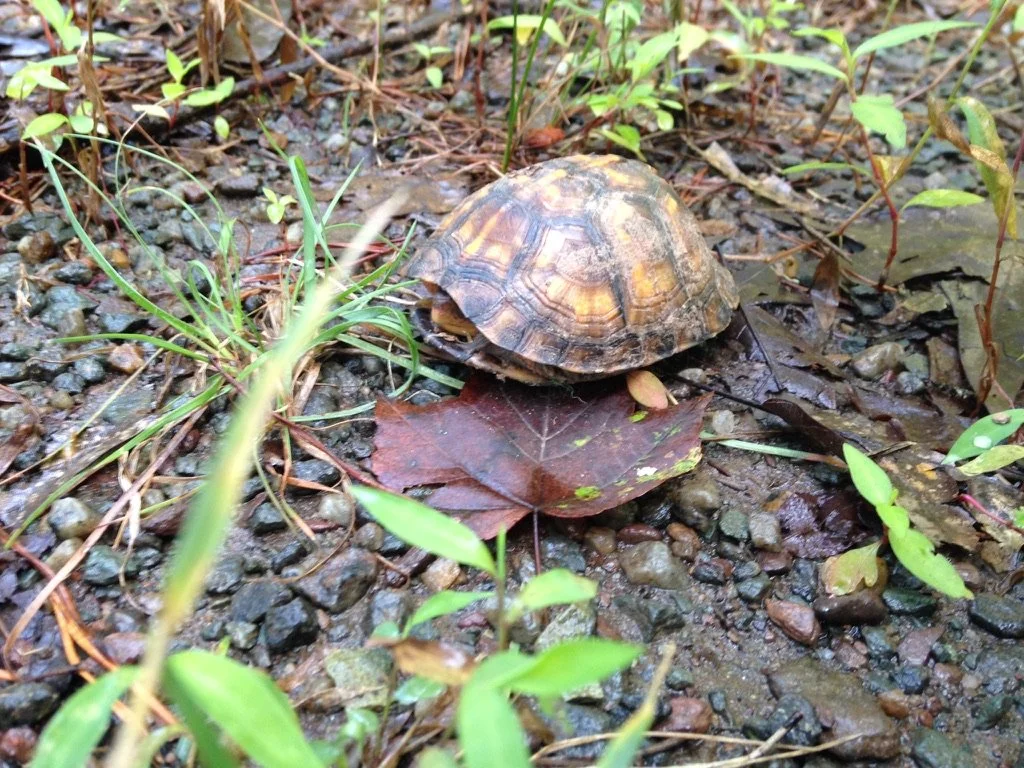
An Eastern Box Turtle on the farm
Meet the Eastern Box Turtle
The Eastern Box Turtle (Terrapene carolina carolina) is native to Virginia and found throughout much of the eastern United States. Unlike aquatic turtles, box turtles are terrestrial, meaning they live on land. If you find one wandering through your yard or garden, please don’t place it in water—that can be dangerous for them!
These turtles are fascinating creatures with long lifespans. Many live 50–80 years, and some can even approach 100 years old. However, they don’t begin reproducing until around 10 years of age, which means protecting adult turtles is especially important for maintaining healthy populations.
You can even tell males and females apart:
Males: concave (curved inward) belly and typically redder eyes
Females: flatter belly and often browner eyes
Research from the Clifton Institute, which runs a Box Turtle research program here in Virginia, shows that populations often have about two males for every female. One reason may be that females are more active, especially when searching for nesting sites, making them more vulnerable to cars and lawn equipment.
What Do Box Turtles Eat?
Box turtles are wonderful allies in the garden.
Their diet includes:
Fruit (especially blackberries)
Fungi — about ¾ of their diet is mushrooms!
Invertebrates like snails and slugs
Yes, they happily snack on some of the pests gardeners struggle with most.
They also have what researchers affectionately call the “slug mug”, the adorably gruesome turtle face after enjoying a slug meal.
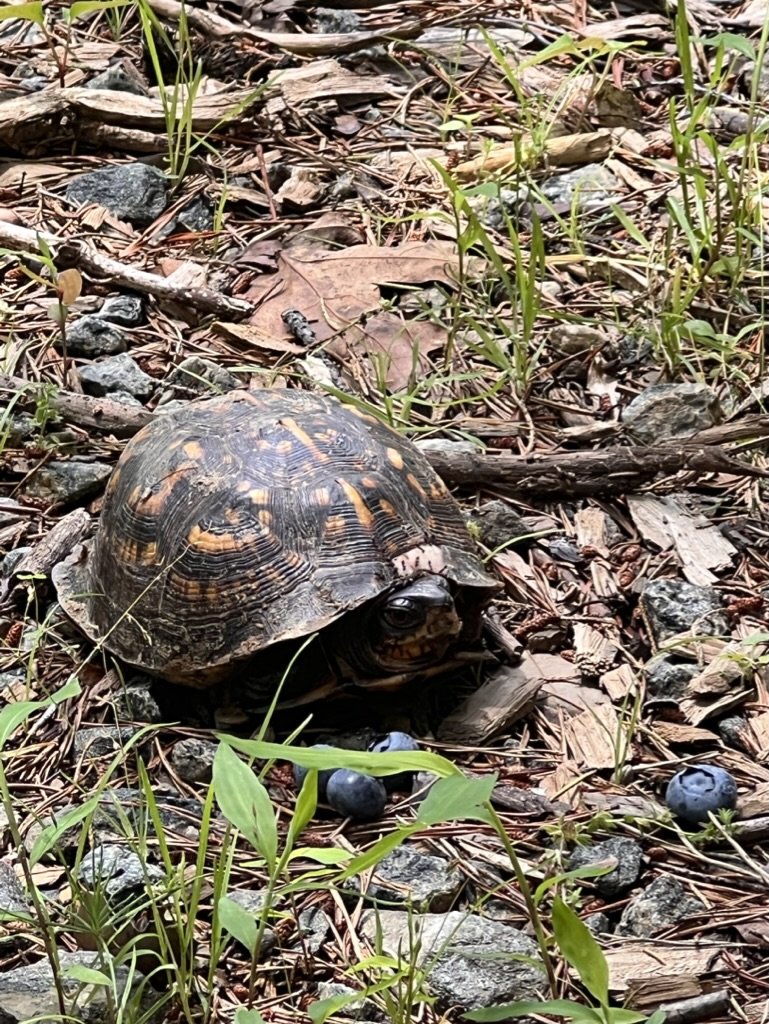
An Eastern Box Turtle on the farm, enjoying some blueberries freshly picked from one of our blueberry bushes.
Winter Survival: Why Leaves Matter
Box turtles spend the winter in forests, burrowing beneath leaf litter. In the fall they may tuck themselves under leaves just an inch below the surface, then gradually burrow deeper as the soil freezes to stay insulated and alive.
For this reason, you may have heard:
Leave the leaves!
Leaf litter supports soil health, insects, amphibians, and of course overwintering turtles.
Box turtles often return to the same overwintering site every year—sometimes within just 20 feet of the previous year’s location. The turtle pictured below was returning it it’s overwintering site, right where I had planted some hellebores. They have since been relocated!
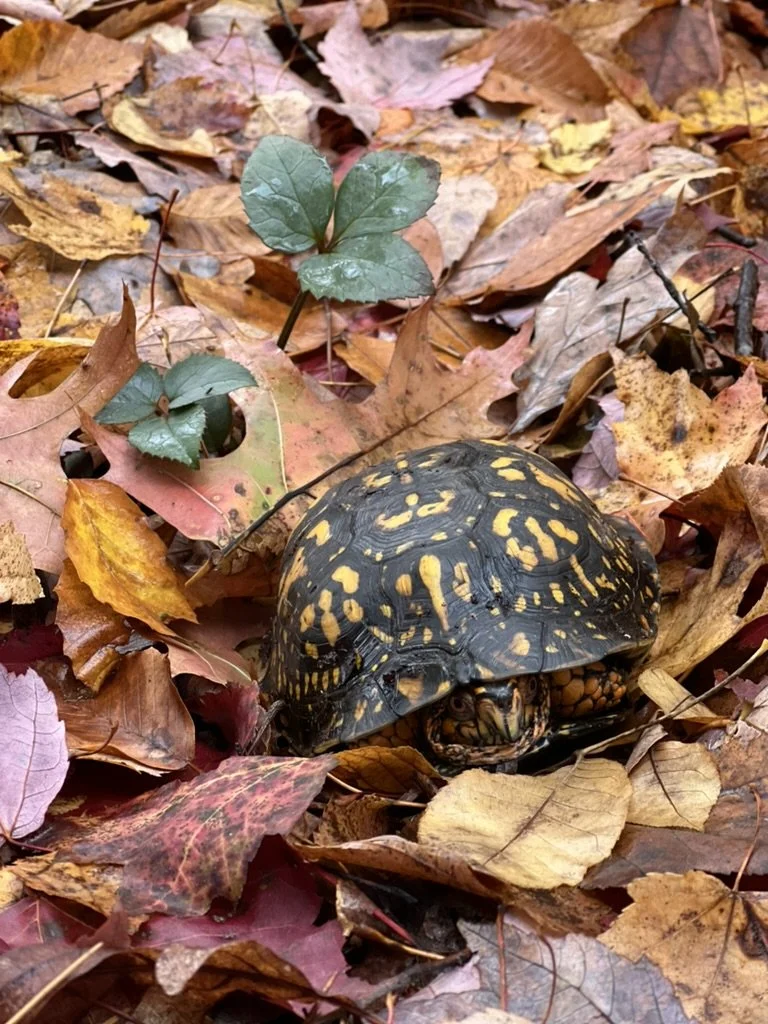
An Eastern Box Turtle on the farm’s hellebore patch. I think I found their overwintering spot as they dug up quite a few of my hellebores last autumn! Sorry y’all! The hellebores have been relocated as to not disturb them.
Nesting and Movement
Box turtles are generally active from April through November.
During nesting season, females will travel surprisingly far. GPS tracking from the Clifton Institute research shows they travel up to half a mile to lay their eggs.
Once laid, the eggs incubate for 50–105 days.
Soil temperature determines the sex of hatchlings, similar to sea turtles. Warmer soils produce more females, which means climate change could shift turtle populations over time. Only continued research will tell!
Threats to Box Turtles
Despite their resilience, box turtles face many human-related threats:
Habitat loss
Road traffic
Lawn mowing
Disease
Insecticides and herbicides
Increasing raccoon populations (which raid nests)
Poaching for the pet trade
Even small actions—like mowing at the wrong time or clearing too much habitat—can have an outsized impact on these slow-reproducing animals.
Mowing with Turtles in Mind
Based on several years of research from the Clifton Institute, here are simple ways to help protect turtles while maintaining your property.
If maintaining an open field:
Mow earlier in the season, March–April, before turtle activity peaks.
During peak turtle activity (May–June):
Start mowing in the center of a field and move outward so wildlife has a chance to escape.
Raise your mower blade as high as possible so if you do pass over a turtle, hopefully it won’t be harmed. This also helps reduce lawn burn in summer.
Create turtle-friendly habitat:
Leave thickets and brushy areas.
Be cautious when mowing near forest edges where turtles like to hang out during the heat of summer.
Leave fallen logs and downed trees when possible.
And once again: leave the leaves in autumn.
Research shows turtles prefer areas with shrubs and downed trees for shelter, but they often venture into open, grassy areas to nest, which is why being cautious when you mow is crucial!
If You See a Turtle in Danger
If you find a turtle crossing the road or in a hazardous location and it’s safe for you to help:
Move the turtle in the direction it was already heading.
Don’t relocate it far away. Box turtles have small home ranges and will try to return.
If you find an injured turtle, contact a wildlife rehabilitation center. You can search “wildlife rescue center near me” or consult a list of licensed rehabilitators in Virginia for guidance.
Protecting Turtle Nests
If you come across a nest, you can help protect it from predators by placing a protective cage over the nest. The Clifton Institute provides excellent guidance and resources on how to do this safely.
A Personal Note from the Farm
Population density studies estimate 1–7 turtles per acre in some areas.
Here on the farm, we’ve encountered and marked at least a dozen different box turtles over the past 14 years, which suggests we have a particularly thriving population. Seeing them wander through the garden, blackberry patches, and forest edges has become one of the quiet joys of living here.
Last spring, we were lucky enough to have baby box turtles. Check out this little one in the perennial garden:
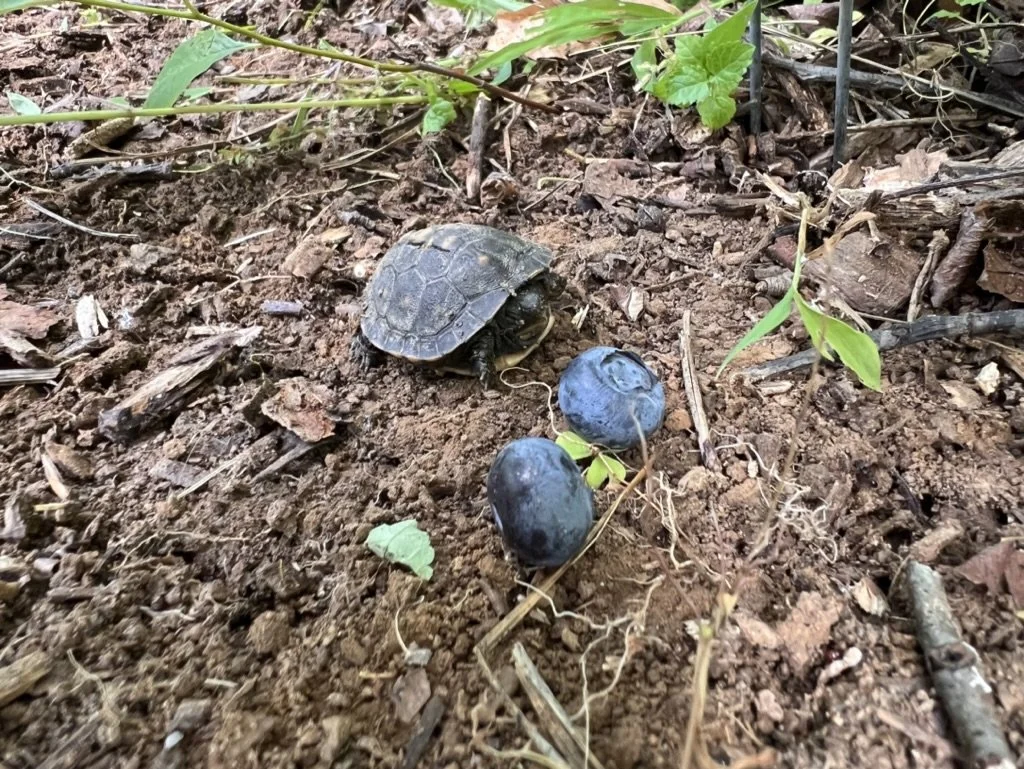
Look at how tiny!
These turtles have likely been sharing this land far longer than we have—and with a little awareness, they can continue to do so for decades to come.
So as mowing season begins, take a moment to slow down, scan the grass, and give these remarkable neighbors the space they need to keep living their long, slow lives.
Winter Farm Updates
This winter has been filled with lots of rest, accompanied by the snow/ice we had for a few weeks. I did a lot of reading, baking, and worked on a few projects for my home and the business. I’m in the midst of a few projects that span late winter through the spring, so I’m keeping this update pretty short!
We celebrated birthdays (February is full of birthdays for my family), made lots of goodies from my new sourdough starter (who we call David Doughwie), including pizza dough, sandwich bread, english muffins, and crackers, then had a great time playing on the icy snow that covered the farm for a few weeks.
As I write this, it seems that we missed spring and jumped straight to summer as it is almost 80 degrees Fahrenheit outside! This weather is commonly referred to as “Fake Spring” and I’m feeling it. I love seeing everything start to pop up and wake up after the cold winter!
In all of the craziness that’s happening in the world right now, I hope you’re finding pockets of joy. There is still so much good in the world. Take care and live well.